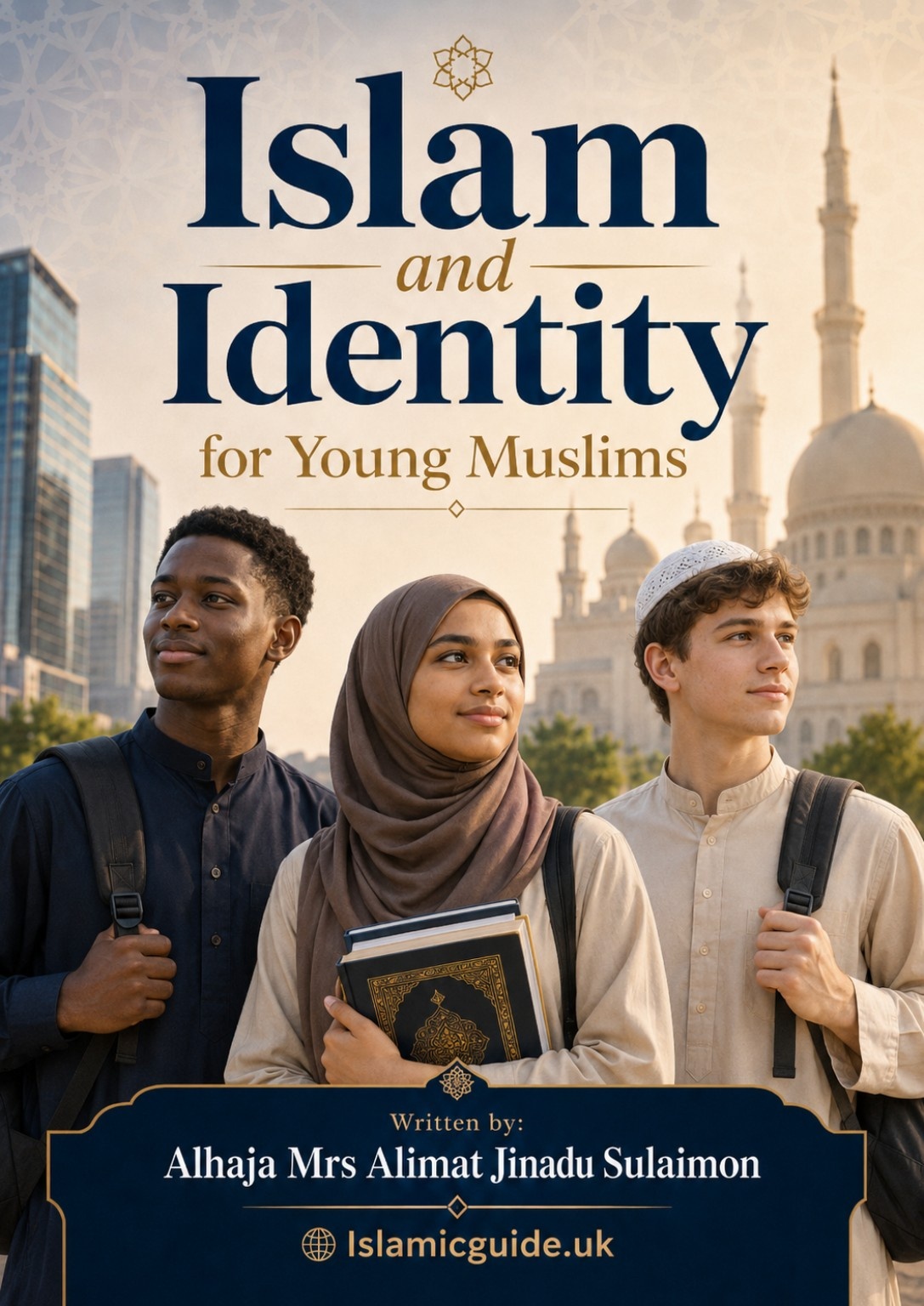
Islam and Identity for Young Muslims
Introduction
Knowing Who You Are Through Faith
Every young person goes through a stage in life where they begin to ask important questions: Who am I? Where do I belong? What do I believe? What kind of person do I want to become?
For young Muslims, these questions are very important because identity is not only about appearance, culture, language, nationality, school, friends, or social media. A Muslim’s identity begins with something deeper: knowing Allah, understanding the purpose of life, and living with faith, dignity, and good character.
Today, many teenagers are surrounded by different voices. Social media tells them how to look. Society tells them what success should mean. Friends may influence what they say, wear, believe, or do. Sometimes, young Muslims may feel pressure to hide parts of their faith so they can fit in. They may feel shy to pray, nervous to dress modestly, afraid to say no to wrong behavior, or confused when people question Islam.
This book is written to remind young Muslims that Islam is not something to be embarrassed about. Islam is an honor. It is a light, a guide, and a source of strength. Allah has given Muslims a beautiful way of life that teaches peace, purpose, discipline, respect, and confidence.
Allah says in the Qur’an:
“And I did not create the jinn and mankind except to worship Me.”
Qur’an 51:56
This verse teaches us that life has meaning. We were not created without purpose. Worshipping Allah is not only about praying and fasting, although these are very important. Worship also includes being honest, showing kindness, respecting parents, helping others, seeking knowledge, protecting ourselves from harm, and making choices that please Allah.
A young Muslim does not need to copy every trend to feel valuable. Their value does not come from followers, popularity, beauty, money, or other people’s approval. Their real value comes from Allah. Allah says:
“O humanity! Indeed, We created you from a male and a female, and made you into peoples and tribes so that you may get to know one another. Surely the most noble of you in the sight of Allah is the most righteous among you. Allah is truly All-Knowing, All-Aware.”Qur’an 49:13
This means that the best person is not the richest, the most famous, or the most admired by people. The best person is the one who has taqwa (awareness of Allah) and tries to live in a way that pleases Him.
Islam also teaches that identity must be shown through character. A Muslim should not only say, “I am Muslim,” but should also show Islam through honesty, patience, modesty, respect, mercy, and good manners. The Prophet Muhammad (saw) said:
“The best among you are those who have the best manners.”
Sahih al-Bukhari
This hadith is very important for young Muslims. It teaches that Islam is not only in the heart, but also in behavior. The way we speak, the way we treat people, the way we respond to difficulties, and the way we carry ourselves all reflect our identity.
This book will guide young Muslims step by step in understanding who they are through Islam. It will explore faith, confidence, modesty, friendships, social media, prayer, character, challenges, and the importance of staying close to Allah in a changing world.
Being young is a special stage of life. It is a time to learn, grow, make decisions, build habits, and prepare for the future. A young Muslim who understands their identity can walk through life with confidence, not arrogance; humility, not weakness; and faith, not confusion.
Islam does not stop young Muslims from dreaming big. It teaches them how to dream with purpose. A young Muslim can be educated, creative, ambitious, successful, and confident while still holding firmly to their faith.
To be a young Muslim is to know that you belong to Allah. It is to understand that your life matters, your choices matter, your character matters, and your faith is your strength.
This book is a reminder that Islam is not a burden on your identity.
Islam is the foundation of your identity.
Chapter One
Who Am I as a Young Muslim?
Every young person reaches a point in life where they begin to ask, “Who am I?” This question may sound simple, but it is one of the most important questions a person can ever ask. For a young Muslim, identity is not only about where you were born, what language you speak, the clothes you wear, the school you attend, or the friends you have. Your true identity begins with knowing that you are a servant of Allah, created with purpose, honor, and responsibility.
In today’s world, many teenagers are told to define themselves by popularity, appearance, talent, followers, wealth, or what other people think of them. Social media can make young people feel that they must constantly prove themselves. Some may feel pressured to look a certain way, behave a certain way, or hide parts of their faith so they can be accepted. But Islam teaches something much deeper and more powerful: your value is not decided by people. Your value comes from Allah.
Allah says in the Qur’an:
«“And I did not create the jinn and mankind except to worship Me.”
Qur’an 51:56»
This verse gives a young Muslim a clear answer to the question of identity. You were not created without meaning. You were not created to simply follow trends, chase attention, or live without direction. You were created to know Allah, worship Him, obey Him, and live a life that pleases Him.
Worship in Islam is not limited to salah, fasting, zakah, and hajj, although these are very important pillars of the religion. Worship also includes telling the truth, respecting your parents, being kind to your classmates, helping someone in need, avoiding harmful behavior, seeking knowledge, dressing with modesty, controlling anger, and choosing what is halal over what is haram. When a young Muslim understands this, they begin to see that Islam is not separate from life. Islam guides every part of life.
Being a Muslim is an honor. It means you believe in Allah, the One and Only God. It means you follow the guidance of the Prophet Muhammad (saw). It means you belong to an ummah that stretches across different races, countries, languages, and cultures. Whether a Muslim is Black, brown, white, Arab, African, Asian, European, rich, poor, young, or old, Islam unites them through faith.
A person’s worth is not based on skin colour, nationality, family background, beauty, money, or social status. In the sight of Allah, honour comes through taqwa — being conscious of Allah and trying to live in obedience to Him.
This is why a young Muslim should never feel ashamed of their faith. Praying at school, wearing hijab, avoiding haram relationships, staying away from alcohol or drugs, speaking respectfully, and choosing modesty are not signs of being backward or weak. They are signs of strength, discipline, and faith.
However, being a young Muslim does not mean being perfect. Every young person makes mistakes. Sometimes you may miss a prayer, say something wrong, feel weak, become distracted, or struggle with peer pressure. Islam does not teach hopelessness. Islam teaches repentance, growth, and returning to Allah.
A Muslim identity must be seen in behaviour. It is not enough to simply say, “I am Muslim.” A young Muslim should try to show Islam through honesty, kindness, patience, humility, respect, and mercy. Your character can become a form of da‘wah, because people may learn about Islam through the way you treat them.
At times, you may feel different from others because of your faith. You may see people doing things that Islam does not allow, and you may feel left out. But remember this: not every popular thing is right, and not every lonely path is wrong. The path of Islam may require patience, but it leads to peace, dignity, and success with Allah.
Your identity as a young Muslim gives you strength. It reminds you that you belong to Allah before you belong to any trend, group, or society. It teaches you that your choices matter. It gives you a moral compass when the world becomes confusing. It helps you know what to accept, what to avoid, and how to carry yourself with confidence.
To be a young Muslim is to live with purpose. It is to know that your life has meaning. It is to understand that your faith is not something to hide, but something to value. It is to walk through the world with humility, courage, and trust in Allah.
You are not just a teenager trying to fit in.
You are a young Muslim created by Allah, honored with Islam, guided by the Qur’an, and invited to live a life of purpose, faith, and good character.
Chapter Two
Knowing Allah: The Foundation of Your Identity
After asking, “Who am I?” the next important question is, “Who do I belong to?”
For a young Muslim, the answer is clear and powerful: you belong to Allah. You were created by Allah, sustained by Allah, guided by Allah, and one day you will return to Allah. This understanding is the foundation of Islamic identity. Without knowing Allah, a person may spend life searching for meaning in places that cannot truly satisfy the heart.
Many teenagers today are looking for identity in popularity, appearance, relationships, online attention, achievements, fashion, music, social groups, or the opinions of others. These things may give temporary happiness, but they cannot give lasting peace. A person may receive compliments and still feel empty. They may have many followers and still feel lonely. They may be accepted by people and still feel lost inside.
Islam teaches that real peace begins when the heart knows Allah.
Allah says in the Qur’an:
«“Unquestionably, by the remembrance of Allah hearts are assured.”
Qur’an 13:28»
This verse teaches that the heart finds true comfort through remembering Allah. For young Muslims, this is very important. Life can sometimes feel confusing. School pressure, family expectations, friendships, personal struggles, and social media comparisons can make a teenager feel overwhelmed. But when a young Muslim remembers Allah, they remember that they are not alone. Allah sees them, hears them, knows their struggles, and is always near.
Knowing Allah does not only mean knowing that He exists. It means understanding His greatness, mercy, wisdom, and care. Allah is not distant from His creation. He is the One who provides, protects, forgives, guides, and answers prayers. When a young Muslim understands this, their relationship with Allah becomes personal and meaningful.
Allah says:
«“And when My servants ask you concerning Me, indeed I am near. I respond to the invocation of the supplicant when he calls upon Me.”
Qur’an 2:186»
This verse is full of hope. It reminds every young Muslim that Allah is near. You do not need to be perfect before you speak to Allah. You do not need to have everything in your life sorted out before you make du‘a. You can turn to Allah when you are happy, confused, sad, ashamed, afraid, or hopeful. Allah listens.
One of the most beautiful parts of being Muslim is knowing that Allah understands what people cannot always understand. Sometimes, a teenager may struggle silently. They may smile in front of others but feel heavy inside. They may be fighting private battles that nobody knows about. Islam teaches that Allah knows what is hidden in the heart.
Allah says:
«“And We have already created man and know what his soul whispers to him, and We are closer to him than his jugular vein.”
Qur’an 50:16»
This does not mean that Allah is physically inside a person. Rather, it shows Allah’s complete knowledge, power, and nearness through His awareness and care. He knows every fear, every tear, every hope, and every silent prayer. For a young Muslim, this should bring comfort. Even when people misunderstand you, Allah knows the truth of your heart.
Knowing Allah also protects a young Muslim from losing themselves. When you know that Allah created you with honour, you do not need to lower your values to gain approval. When you know that Allah sees you, you become more careful with your choices. When you know that Allah is Merciful, you do not give up after mistakes. When you know that Allah is Wise, you learn to trust Him even when life does not go the way you planned.
Being mindful of Allah means remembering Him in your choices. It means asking yourself: Is this pleasing to Allah? Is this good for my heart? Is this helping me become a better Muslim? Is this something I would be proud to answer for on the Day of Judgement?
Being mindful of Allah does not make life boring. It gives life direction. It helps a young Muslim make better decisions about friendships, speech, entertainment, modesty, school, family, online behavior, and personal goals. It teaches that freedom is not doing anything you want without limits. True freedom is not being controlled by desires, peer pressure, or people’s opinions. True freedom is being guided by Allah.
A young Muslim who knows Allah becomes stronger from within. They may still face challenges, but they are not easily broken. They may still feel emotions, but they are not controlled by them. They may still make mistakes, but they know how to return to Allah. Their identity is not built on unstable things. It is built on faith.
This is why learning about Allah is one of the most important parts of growing up as a Muslim. The more you know Allah, the more you understand yourself. The more you remember Allah, the more your heart finds peace. The more you trust Allah, the more courage you gain to live as a Muslim with confidence.
You belong to Allah.
That means your life has value. Your heart has a Lord. Your struggles have meaning. Your prayers are heard. Your future is in the hands of the Most Merciful.
A young Muslim who knows Allah does not need to feel lost in the world.
• They have a Creator.
• They have a Guide.
• They have a purpose.
And that is the strongest foundation for identity.
Chapter Three
The Qur’an: A Light for the Young Muslim
Every generation has its own challenges. For young Muslims today, many of those challenges come through confusion, pressure, comparison, and distraction. A teenager may wake up in the morning and be surrounded by messages from every direction: what to wear, how to look, who to follow, what to believe, how to speak, and what kind of life is considered “successful.”
In a world where so many voices compete for attention, a young Muslim needs a voice that is truthful, steady, and pure. That voice is the Qur’an.
The Qur’an is not an ordinary book. It is the word of Allah, revealed as guidance for mankind. It was sent to bring people out of darkness and into light, out of confusion and into clarity, out of emptiness and into purpose. For a young Muslim, the Qur’an is not only something to recite; it is something to understand, love, follow, and live by.
Allah says:
«“This is the Book about which there is no doubt, a guidance for those conscious of Allah.”
Qur’an 2:2»
This verse teaches that the Qur’an is certain guidance. Human opinions change. Trends rise and disappear. Social media standards shift from one day to another. What people praise today, they may criticize tomorrow. But the guidance of Allah remains true in every time and place.
A young Muslim who holds onto the Qur’an is not lost, even when the world feels confusing. The Qur’an teaches you who Allah is, why you were created, how to worship Him, how to treat others, how to protect your heart, and how to make choices that lead to success in this life and the Hereafter.
Sometimes, teenagers feel pressure to build their identity around appearance, popularity, relationships, achievements, or other people’s approval. They may begin to ask themselves: Am I attractive enough? Am I popular enough? Am I successful enough? Do people like me? Do I fit in?
The Qur’an teaches a higher truth. Your worth is not measured by followers, beauty, wealth, likes, comments, or social status. Your worth is connected to your relationship with Allah and the condition of your heart.
Allah says:
«“Indeed, the most noble of you in the sight of Allah is the most righteous of you.”
Qur’an 49:13»
This verse protects the young Muslim from false measures of value. It reminds you that Allah does not judge you by the things people often chase. He honors those who have taqwa - those who remember Him, obey Him, and try sincerely to live in a way that pleases Him.
The Qur’an also gives comfort during hardship. Being young does not mean life is always easy. Some young people struggle with confidence. Some struggle with family problems, school pressure, loneliness, guilt, anxiety, or the fear of not being good enough. Some carry pain quietly because they do not know how to explain what they feel.
The Qur’an speaks to the wounded heart with hope.
Allah says:
«“So, surely with hardship comes ease. Surely with that hardship comes more ease.”
Qur’an 94:5–6»
This promise from Allah reminds young Muslims that hardship is never the end of the story. Difficulty may be painful, but it is not permanent. A bad day does not mean a bad life. A mistake does not mean you are hopeless. A struggle does not mean Allah has abandoned you. With every hardship, Allah can bring ease, strength, wisdom, and a new beginning.
This is why the Qur’an should become a close companion for every young Muslim. A companion is someone who stays with you, advises you, comforts you, corrects you, and helps you become better. The Qur’an does all of this. It softens the heart when it becomes hard. It reminds the soul when it becomes distracted. It gives courage when the believer feels weak.
Chapter Four
Salah: The Daily Connection That Shapes Your Identity
Every young Muslim needs something steady in life. The world can be busy, noisy, and demanding. School, friendships, family responsibilities, personal goals, social media, and daily worries can quickly fill the mind. Sometimes, a teenager may feel pulled in many directions at once. In the middle of all this, Allah has given Muslims a gift that brings the heart back to peace: Salah is not only a religious duty. It is a daily connection with Allah. It is the moment when a Muslim pauses from the world, stands before the Creator, and remembers what truly matters. For a young Muslim, salah is one of the strongest foundations of identity because it reminds them, again and again, that they belong to Allah.
Allah says:
“When the prayers are over, remember Allah – whether you are standing, sitting, or lying down. But when you are secure, establish regular prayers. Indeed, performing prayers is a duty on the believers at the appointed times. “Qur’an 4:103»
This verse teaches that salah is not something to treat casually or delay without care. It has fixed times because it is meant to shape the rhythm of a Muslim’s life. Fajr begins the day with remembrance. Dhuhr brings the heart back to Allah in the middle of daily activity. Asr reminds the believer not to become lost in the afternoon’s distractions. Maghrib marks the closing of the day with gratitude. Isha ends the night with worship and reflection.
For teenagers, salah builds discipline. It teaches time management, responsibility, focus, and self-control. A young Muslim who protects their prayer learns that their day is not controlled only by school timetables, phone notifications, or social plans. Their day is also organized around meeting Allah.
Sometimes, praying as a teenager can feel difficult. You may be at school, college, work, or outside with friends. You may feel shy asking for a place to pray. You may worry about what people will think. You may struggle with tiredness, laziness, or distraction. These challenges are real, but they do not make salah less important. In fact, praying when it is difficult can become a sign of sincerity and strength.
A young Muslim should never feel embarrassed to pray. Salah is an honour, not a shame. It is a sign that Allah has guided your heart to remember Him. Many people are busy chasing peace in different places, but Allah has already shown believers where true peace begins.
Allah says:
“’It is truly I. I am Allah! There is no god worthy of worship except Me. So worship Me alone, and establish prayer for My remembrance.’”Qur’an 20:14»
This verse shows that salah is deeply connected to remembering Allah. When life becomes stressful, salah reminds you that Allah is greater than every problem. When you feel lonely, salah reminds you that Allah is near. When you make mistakes, salah opens the door to return. When your heart feels heavy, salah gives you a place to release what words cannot explain.
Salah also protects the believer from harmful behaviour. When a young Muslim prays sincerely, they become more aware of their actions. They begin to ask themselves: How can I stand before Allah and then knowingly continue what displeases Him? How can I ask Allah for guidance but ignore His commands? How can I seek peace from Allah while feeding my heart with harmful things?
Allah says:
“Recite, [O Muhammad], what has been revealed to you of the Book and establish prayer. Indeed, prayer prohibits immorality and wrongdoing, and the remembrance of Allah is greater. And Allah knows that which you do.”
Qur’an 29:45»
This does not mean that a person who prays will never make mistakes. Muslims are human, and humans can fall short. But sincere salah softens the heart, awakens the conscience, and pulls the believer back from sin. It becomes a protection, a reminder, and a path towards change.
For young Muslims, salah is also a source of confidence. In a world where people often define themselves by what others think, salah teaches you to stand before Allah first. The opinion of people becomes less powerful when the heart is connected to the Lord of all people. A young Muslim who prays begins to understand that approval from Allah is greater than approval from society.
Salah teaches humility too. In sujood, the highest part of the body (the forehead ) is placed on the ground. This position reminds the believer that greatness belongs only to Allah. No matter how talented, beautiful, popular, intelligent, or successful a person becomes, they still need Allah. Sujood teaches the heart not to become arrogant.
Building a strong relationship with salah takes patience. A young Muslim should begin by protecting the five daily prayers and learning how to pray correctly. They should try to understand the meanings of what they recite. They should avoid rushing. They should remember that every prayer is a meeting with Allah.
If you have missed prayers in the past, do not let guilt stop you from returning. Shaytan wants people to feel hopeless, but Allah wants His servants to come back to Him. Begin again. Pray the next salah. Ask Allah for help. Build slowly but sincerely.
Salah is not only something you do.It is something that shapes who you become.
It teaches you discipline when life is distracting. It gives you peace when your heart is tired. It protects you when temptations are strong. It humbles you when pride appears. It strengthens you when you feel weak. It reminds you that no matter where you are, who you are with, or what you are facing, Allah is always worthy of your time.
To be a young Muslim is to be connected to Allah through salah.
When you protect your prayer, you protect your identity.
When you return to prayer, you return to your purpose.
And when you stand before Allah, you remember who you truly are.
Chapter Five
Modesty: Honour, Confidence, and Self-Respect
Modesty is one of the most beautiful qualities in Islam. It is not weakness, shame, or fear. It is honour. It is dignity. It is the strength to value yourself in a world that often teaches people to seek attention in the wrong ways.
For young Muslims, modesty is an important part of identity. It teaches you that your body, your speech, your behaviour, and your character are precious. You do not need to expose yourself, follow every trend, or copy everything society celebrates in order to feel confident. True confidence comes from knowing your worth before Allah.
Today, many teenagers are pressured to look a certain way. Social media often promotes beauty without boundaries, popularity without values, and attention without responsibility. Young people may feel that they must dress, speak, act, or present themselves in a certain way to be accepted. But Islam teaches that your value is not based on how much attention you receive. Your value is already given by Allah.
Allah says:
“We have honored the children of Adam and carried them by land and sea; We have provided good sustenance for them and favored them specially above many of those We have created."
Qur’an 17:70
This verse reminds us that every human being has honors from Allah. A young Muslim should never feel that modesty reduces their beauty or confidence. In reality, modesty protects honors. It helps a person understand that they are more than appearance, more than fashion, more than compliments, and more than people’s opinions.
Modesty in Islam is not only about clothing. Clothing is important, but modesty is wider than what we wear. It includes how we speak, how we behave, how we interact with others, how we use social media, how we carry ourselves, and how we protect our hearts from arrogance, shamelessness, and harmful desires.
The Prophet Muhammad (saw) said:
“Modesty is part of faith.”
Sahih al-Bukhari and Sahih Muslim
This hadith shows that modesty is connected to faith. It is not simply a cultural habit or personal preference. It is part of the beauty of Islam. A modest young Muslim understands that Allah sees them in public and private. They try to behave with respect, even when no one is watching.
For Muslim girls, modesty may include wearing hijab and dressing in a way that pleases Allah. Hijab is not a symbol of oppression. It is a sign of obedience, dignity, and identity. It tells the world that a Muslim woman is not defined by society’s standards of beauty. She belongs to Allah, and her worth is deeper than appearance.
For Muslim boys, modesty is also essential. Sometimes people speak about modesty as though it is only for girls, but Islam commands modesty for both men and women. Muslim boys must also lower their gaze, dress appropriately, control their speech, respect women, avoid arrogance, and protect themselves from haram behaviour.
Allah says:
“Tell the believing men to lower their gaze and guard their private parts. That is purer for them.”
Qur’an 24:30
Modesty also protects the heart. When a young Muslim becomes careful about what they watch, what they post, what they listen to, and who they allow close to them, they are protecting their inner self. Not everything that is popular is healthy for the soul. Not every relationship is good for the heart. Not every trend deserves to be followed.
A modest person is not someone who has no confidence. A modest person has enough confidence not to beg for attention. They do not need to prove themselves through showing off, flirting, insulting others, or following harmful behaviour. Their confidence is quiet, strong, and rooted in faith.
The Prophet Muhammad( saw)was the best example of modesty. He was strong, brave, respected, and honored, yet he was also humble, gentle, and modest. His modesty did not reduce his greatness. It increased his beauty and nobility.
Modesty should also appear in speech. A young Muslim should avoid rude language, gossip, lying, mocking others, and speaking in a way that lowers their dignity. Words can either raise a person or harm them. Islam teaches believers to speak with wisdom, kindness, and responsibility.
Allah says:
“And speak to people good words.”
Qur’an 2:83
This is an important reminder for teenagers. The way you speak at home, in school, online, and with friends matters. Being funny should not mean being cruel. Being confident should not mean being disrespectful. Being honest should not mean being harsh. A Muslim’s tongue should reflect their faith.
Modesty online is also very important. Social media can make people feel comfortable posting things they would never say or do face to face. A young Muslim should remember that online actions are still actions. Posts, comments, pictures, videos, messages, and private conversations are all known to Allah. Digital life is not separate from Islamic identity.
Before posting, ask yourself: Would this please Allah? Does this protect my dignity? Could this harm me or someone else? Am I seeking attention in a way that weakens my faith? These questions help young Muslims use technology wisely.
Being modest may sometimes make you feel different. You may see others getting attention for things Islam tells you to avoid. You may feel pressure to dress differently, speak differently, or behave differently. But remember, the goal of life is not to impress people. The goal is to please Allah.
A young Muslim should never apologise for choosing dignity. You can be stylish and modest. You can be confident and humble. You can be friendly and have boundaries. You can be successful and still fear Allah. Islam does not remove beauty from life; it gives beauty honour and direction.
Modesty is not about hiding who you are.
It is about protecting who you are.
It teaches you that your body is an amanah, your speech is a responsibility, your behaviour is a reflection of faith, and your identity is too valuable to be shaped by every trend.
To be a young Muslim is to walk with dignity.
It is to know that you do not need the approval of the world to feel valuable.
Allah has already honoured you.
And modesty is one of the ways you honour yourself.
Conclusion
Holding Firm to Your Muslim Identity
Being a young Muslim is a beautiful honor. It means that Allah has guided you to Islam, given you a purpose, and shown you a path that leads to peace, dignity, and success. In a world where many people are searching for meaning, Islam gives you the answer to who you are, why you are here, and where you are going.
Your identity is not built on popularity, appearance, social media, wealth, trends, or the approval of people. These things can change quickly. One day people may praise something, and the next day they may reject it. One day a trend may seem important, and soon after it may disappear. But Islam is not like that. Islam is truth from Allah, and the guidance of Allah does not fade.
As a young Muslim, you belong to Allah. This is the strongest foundation for your identity. You were created with purpose, honored with faith, and given the Qur’an and Sunnah as guidance. When life becomes confusing, Islam gives clarity. When the heart becomes weak, prayer brings strength. When the world becomes loud, the remembrance of Allah brings peace.
Allah says:
«“Unquestionably, by the remembrance of Allah hearts are assured.”
Qur’an 13:28»
This reminder is important for every young Muslim. Real peace does not come from trying to please everyone. It does not come from pretending to be someone else. It comes from remembering Allah, trusting Him, obeying Him, and returning to Him again and again.
Throughout this book, you have been reminded that Islamic identity is not only something you say; it is something you live. It is seen in your belief, your prayer, your modesty, your manners, your friendships, your choices, and your relationship with Allah. A Muslim identity should shape the heart, the tongue, the behaviour, and the goals of life.
The Prophet Muhammad (saw)said:
«“The best among you are those who have the best manners.”
Sahih al-Bukhari»
This teaches that good character is one of the strongest signs of a beautiful Muslim identity. Your Islam should be seen in how you treat your parents, how you speak to people, how you behave when you are upset, how you act online, how you respect yourself, and how you show mercy to others.
There may be times when holding onto Islam feels difficult. You may feel different. You may face questions, pressure, temptation, or loneliness. You may make mistakes. But remember, being Muslim does not mean being perfect. It means believing in Allah, striving to obey Him, repenting when you fall short, and never giving up on His mercy.
Allah says:
«“Do not despair of the mercy of Allah.”
Qur’an 39:53»
This verse is a message of hope. No matter how many times a person struggles, the door of repentance remains open. A young Muslim should never think they are too far from Allah to return. Allah loves those who turn back to Him sincerely.
Your teenage years are a powerful time. They are years of learning, growing, building habits, making decisions, and discovering the kind of person you want to become. Use these years wisely. Learn your religion. Protect your prayer. Read the Qur’an. Choose good friends. Respect your parents. Guard your modesty. Be honest. Work hard in your studies. Dream big, but keep Allah at the centre of your dreams.